The Difference Between Rewriting and Editing
There is a common misconception about what editors actually do. Many writers — especially those submitting academic work for the first time — expect an editor to simply take their draft and return a polished, restructured version. In reality, that approach is not editing. It is ghostwriting, and it can do more harm than good.
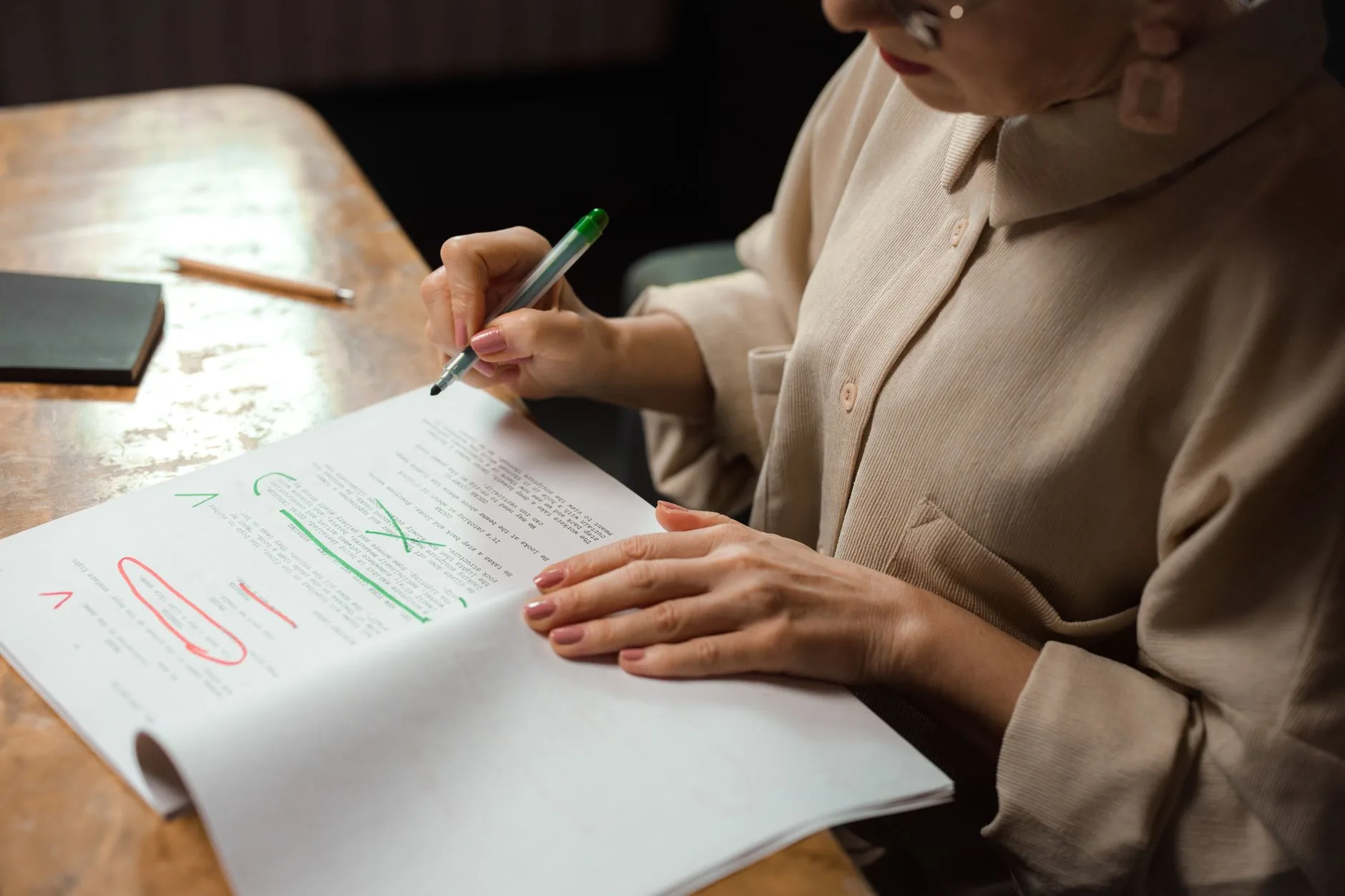
A skilled editor does something far more valuable: they ask questions. They pause at a confusing passage and ask, "What did you mean to say here?" They flag an underdeveloped argument and note, "This claim needs more support — can you expand on your reasoning?" This dialogue-driven approach is what separates true professional editing from simple correction.
Why Questions Protect Your Voice
Every writer has a distinctive voice — a way of structuring thoughts, a rhythm to their sentences, a set of recurring ideas that make their work uniquely theirs. When an editor rewrites without asking, they risk replacing that voice with their own. The result is a document that reads more fluently on the surface but no longer sounds like you.
This is particularly important in academic writing, where your scholarly voice is part of your intellectual identity. A journal article, thesis, or dissertation must reflect your thinking, your analytical framework, and your conclusions. If an editor simply rewrites large sections to "sound better," reviewers, supervisors, and examiners may notice that the voice shifts — and that inconsistency can raise red flags.
By asking questions instead, an editor invites you to clarify, expand, and refine your own ideas. The improvements come from you. The editor simply helps you find them.
Questions That Reveal Deeper Problems
Sometimes a poorly written sentence is not a grammar problem — it is a thinking problem. When a sentence is confusing, it often means the underlying idea is not yet fully formed. A rewrite would smooth over this gap without resolving it. A question exposes it.
Consider a thesis statement that is vague and meandering. An editor could rewrite it to be more concise, but that would mean the editor is now making your argument for you. Instead, a good editor asks: "What is the single most important claim you are making in this paper?" That question forces you to think more precisely — and the answer you produce will be far stronger than anything an editor could have invented on your behalf.
Common Questions a Good Editor Might Ask
- "Is this the order you intended?" — prompting the author to reconsider structure rather than having the editor impose one.
- "Who is your intended audience here?" — helping the author calibrate their language and depth of explanation.
- "Is this citation supporting the claim you think it is?" — encouraging the author to double-check their sources rather than assuming the editor will validate them.
- "Can you say this more directly?" — guiding toward clarity without replacing the author's wording.
- "Does this paragraph follow logically from the previous one?" — drawing attention to gaps in reasoning the author can then address.
The Ethical Dimension of Asking Rather Than Rewriting
In academic contexts, the ethics of editing are taken seriously. Most institutions have clear policies about the level of external assistance that is acceptable. Wholesale rewriting of a student's work — even with good intentions — can cross into academic misconduct territory. Asking questions, on the other hand, is a legitimate and encouraged form of feedback that supports learning without replacing authorship.
This is why reputable services like Academic Editing and PhD Thesis editing are designed to work with the author, not instead of them. The goal is to help you communicate your ideas more effectively, not to communicate them for you.
What to Expect From a Quality Editing Service
When you submit your work for Academic Editing or PhD Thesis editing, you should expect more than a tracked-changes document with corrections. You should receive comments, observations, and yes — questions. These annotations are not signs that something is wrong with your writing. They are signs that an engaged professional is reading your work carefully and helping you make it the best it can be.
Services such as Abstract Editing are particularly focused on precision and clarity, where a single misplaced word can change the meaning of your entire study. In these cases, editors asking "Did you mean X or Y?" can be the difference between an accurate abstract and a misleading one.
Collaboration Is the Heart of Good Editing
The best editing relationships are collaborative. They are built on mutual respect — the editor respects the author's ownership of their ideas, and the author trusts the editor's expertise in communication. Questions are the currency of that collaboration. They signal that your editor is not just processing your text, but genuinely engaging with your thinking.
Next time you receive an edited document full of questions rather than rewrites, take it as a compliment. It means your editor is doing their job properly.