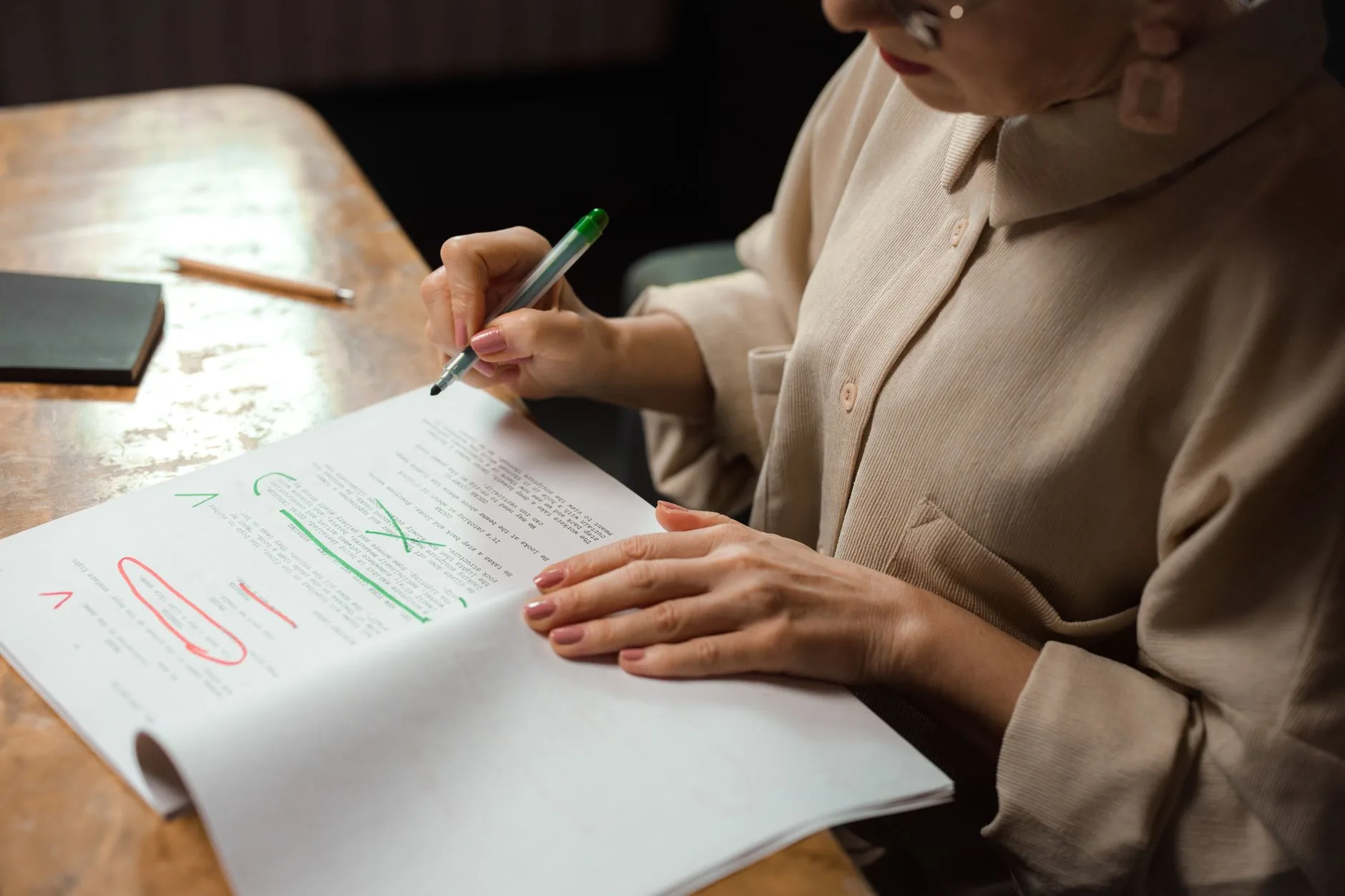
Why the Distinction Matters
Whether you are submitting a PhD thesis, publishing a research paper, or finalising a book manuscript, getting professional support at the right stage of the writing process can make a significant difference to the quality of your final document. However, many writers are unsure which type of service they actually need. Proofreading, editing, and copyediting are three separate processes — each with a distinct focus, depth, and purpose.
Using the wrong service at the wrong time can mean paying for work that does not address your actual needs, or missing critical issues that could undermine your credibility. Let us explore each stage in detail.
What Is Editing?
Editing — sometimes called substantive editing or developmental editing — is the most comprehensive stage of the revision process. It focuses on the big picture of your writing: structure, argument, clarity, and flow.
An editor will assess whether your ideas are logically organised, whether your argument is coherent and well-supported, and whether your writing communicates its intended message effectively. This stage often involves significant restructuring of paragraphs or sections, suggestions to strengthen your argument, and feedback on tone and audience appropriateness.
When Do You Need Editing?
Editing is most valuable in the early-to-middle stages of writing, after you have a complete draft but before you focus on surface-level corrections. Researchers working on long-form academic documents such as dissertations or monographs often benefit greatly from this stage. Academic Editing is a service designed precisely for this purpose, helping scholars refine the substance and structure of their work.
What Is Copyediting?
Copyediting sits between substantive editing and proofreading. It focuses on language accuracy and consistency at the sentence level, without restructuring the overall argument or content.
A copyeditor will correct grammatical errors, improve sentence clarity and readability, ensure consistent use of terminology and style, and check that the text adheres to a specific style guide such as APA, Chicago, or MLA. Copyediting also addresses issues such as awkward phrasing, redundancy, and unclear pronoun references.
Style Guide Compliance
One important aspect of copyediting is ensuring your document follows the correct formatting and style conventions for your field. Academic journals, universities, and publishers often have strict requirements. If your document needs to be brought into line with a particular style guide, this is typically handled at the copyediting stage — or through a dedicated Formatting service.
When Do You Need Copyediting?
Copyediting is ideal once your content is finalised and you are satisfied with the overall structure and argument. It is a common step before submission to a journal, publisher, or academic institution. Writers who are working in a second language, such as researchers using English Academic Editing to prepare manuscripts for international journals, particularly benefit from thorough copyediting.
What Is Proofreading?
Proofreading is the final stage of the revision process. It is a surface-level check that takes place after all editing and formatting have been completed. A proofreader looks for remaining typographical errors, spelling mistakes, punctuation issues, and minor formatting inconsistencies.
Proofreading does not involve rewriting sentences or restructuring content. It is a careful, detail-oriented read-through to ensure the document is clean and error-free before it reaches its final audience.
When Do You Need Proofreading?
Proofreading should always be the last step before submission or publication. Basic Proofreading is well suited to documents that have already been edited and are nearly ready for their final destination — whether that is a journal, a university submission portal, or a publisher. It is also a recommended step after Abstract Editing, to ensure the polished abstract is completely error-free.
A Quick Comparison
- Editing: Big-picture review of structure, argument, and clarity. Early-to-middle draft stage.
- Copyediting: Sentence-level accuracy, grammar, consistency, and style compliance. Post-finalised content.
- Proofreading: Final surface check for typos, spelling, and punctuation. Last step before submission.
Which Service Do You Need?
The right choice depends entirely on where your document is in its development. A rough first draft of a PhD thesis needs editing before it needs proofreading. A manuscript that has already been revised and formatted likely only needs Basic Proofreading. If you are unsure, many academic editing platforms can assess your document and recommend the most appropriate level of intervention.
For researchers writing in a language other than their first, combining Academic Editing with a Plagiarism Check before final submission is a comprehensive approach that addresses both quality and integrity concerns.
Final Thoughts
Understanding the difference between proofreading, editing, and copyediting empowers you to make smarter decisions about your writing process. Each stage serves a unique purpose, and investing in the right type of support at the right time will always yield better results than a one-size-fits-all approach.